How to Select the Right Alloy for High-Stress Applications
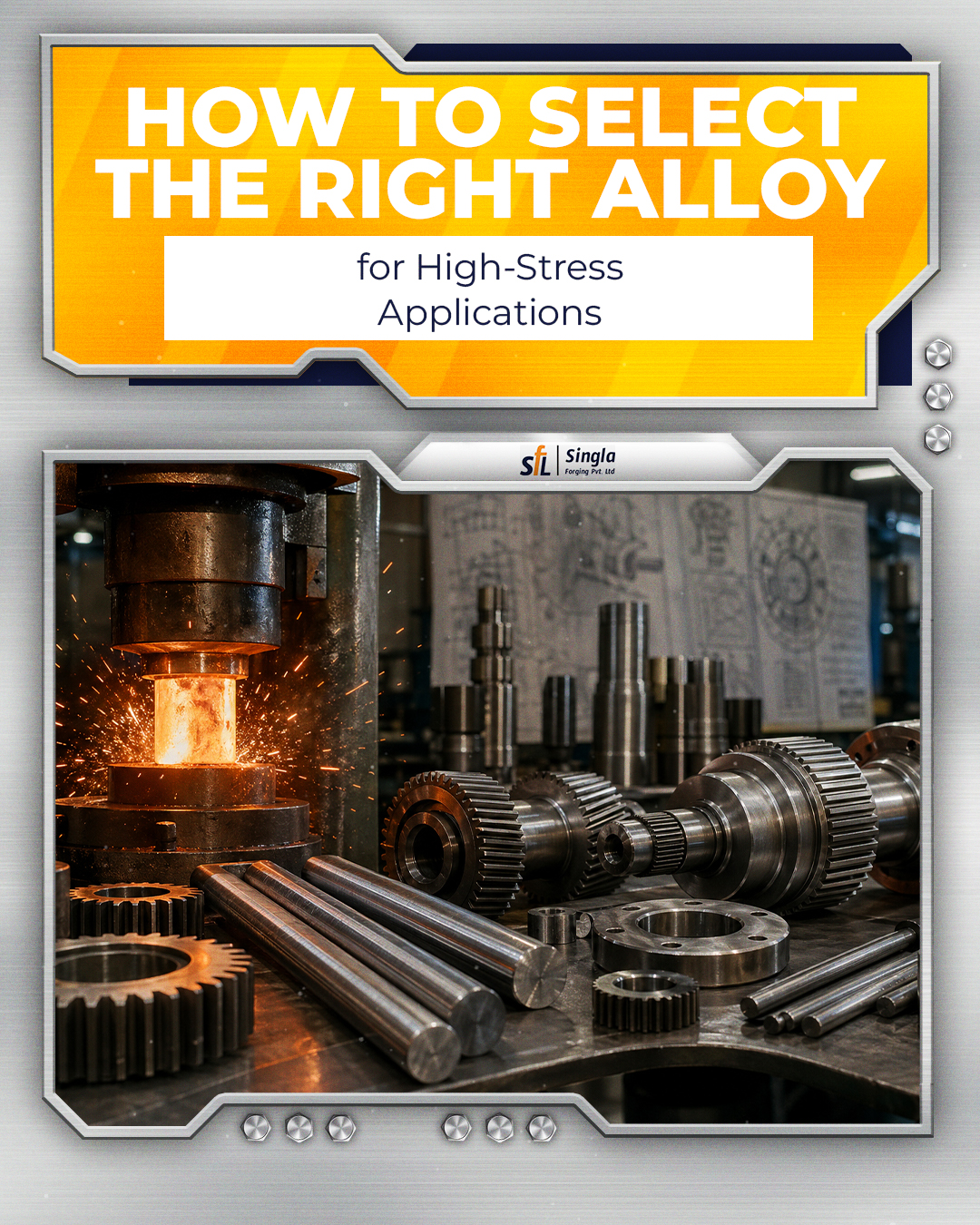
Selecting the right alloy for high-stress applications is one of the most critical decisions in industrial manufacturing. Whether the component is used in automotive systems, heavy machinery, oil and gas equipment, aerospace structures, or industrial forging, the alloy directly impacts strength, durability, wear resistance, and long-term operational reliability.
A poor alloy choice can lead to premature failure, higher maintenance costs, and safety risks. On the other hand, the right alloy ensures superior performance even under extreme pressure, temperature, and repeated mechanical stress.
Understanding High-Stress Applications
High-stress applications refer to environments where components are exposed to intense mechanical loads, impact forces, friction, thermal fluctuations, or corrosive conditions. Examples include crankshafts, gears, shafts, axles, flanges, valves, turbine parts, and structural supports.
These applications demand materials that can withstand fatigue, deformation, and cracking over extended service periods. This is why alloy selection must go beyond basic strength and consider the complete operating environment.
Key Factors to Consider When Selecting an Alloy
1. Mechanical Strength Requirements
The first step is understanding the load-bearing requirements of the application. Tensile strength, yield strength, hardness, and impact resistance are essential properties to evaluate.
For components under repeated loading, fatigue strength becomes especially important. Alloys like chromium-molybdenum steel and nickel-based alloys are often preferred for their excellent strength and toughness under cyclic stress conditions.
The chosen alloy should not only handle maximum loads but also maintain structural integrity over time.
2. Temperature Resistance
Many high-stress applications operate under elevated temperatures, especially in automotive engines, power plants, and industrial processing systems.
Some alloys lose strength when exposed to heat, while others retain their performance even in extreme thermal environments. Stainless steel, heat-resistant alloy steels, and nickel superalloys are commonly selected for such applications because of their thermal stability and oxidation resistance.
Understanding the working temperature range is essential before finalizing the material.
3. Corrosion and Environmental Exposure
Exposure to moisture, chemicals, salt, or aggressive industrial environments can weaken components significantly. Corrosion resistance becomes a major factor in industries like marine engineering, oil and gas, and chemical processing.
For such environments, stainless steel alloys, duplex steel, and corrosion-resistant alloy grades offer better protection and longer service life.
Ignoring environmental conditions often results in costly failures despite high mechanical strength.
4. Wear and Abrasion Resistance
Components such as gears, shafts, and forged machinery parts often face continuous friction and surface wear. In these cases, hardness and abrasion resistance become equally important.
Alloys with higher carbon content or specialized heat-treated alloy steels perform better in wear-intensive environments. Surface hardening treatments can also enhance performance where needed.
Selecting an alloy with the right balance between toughness and hardness is crucial.
5. Manufacturability and Forging Compatibility
Not all strong alloys are easy to forge, machine, or weld. Some materials may offer excellent strength but create production challenges that increase costs and lead times.
The alloy should be compatible with the intended manufacturing process, whether it involves closed-die forging, open-die forging, machining, or heat treatment. Forging-friendly alloys improve grain structure and mechanical properties while ensuring cost-effective production.
This is particularly important for large-scale industrial applications.
6. Cost vs Performance Balance
Opting for the most expensive alloy does not guarantee the best engineering outcome. Material selection should align with both performance requirements and project budget.
For example, carbon steel with proper heat treatment may perform efficiently in many applications where exotic superalloys are unnecessary. The goal is to achieve maximum reliability without excessive material costs.
A practical cost-performance analysis helps optimise long-term value.
Conclusion
Choosing the right alloy for high-stress applications requires a careful evaluation of mechanical demands, temperature conditions, corrosion risks, wear resistance, manufacturability, and overall cost efficiency.
There is no one-size-fits-all solution. The best alloy depends on the specific function and operating environment of the component.
At Singla Forging, precision material selection is a key part of delivering high-performance forged components that meet the toughest industrial demands. With the right alloy, manufacturers can ensure safety, durability, and long-term operational excellence.