How Indian Forging Companies Are Competing on the Global Stage
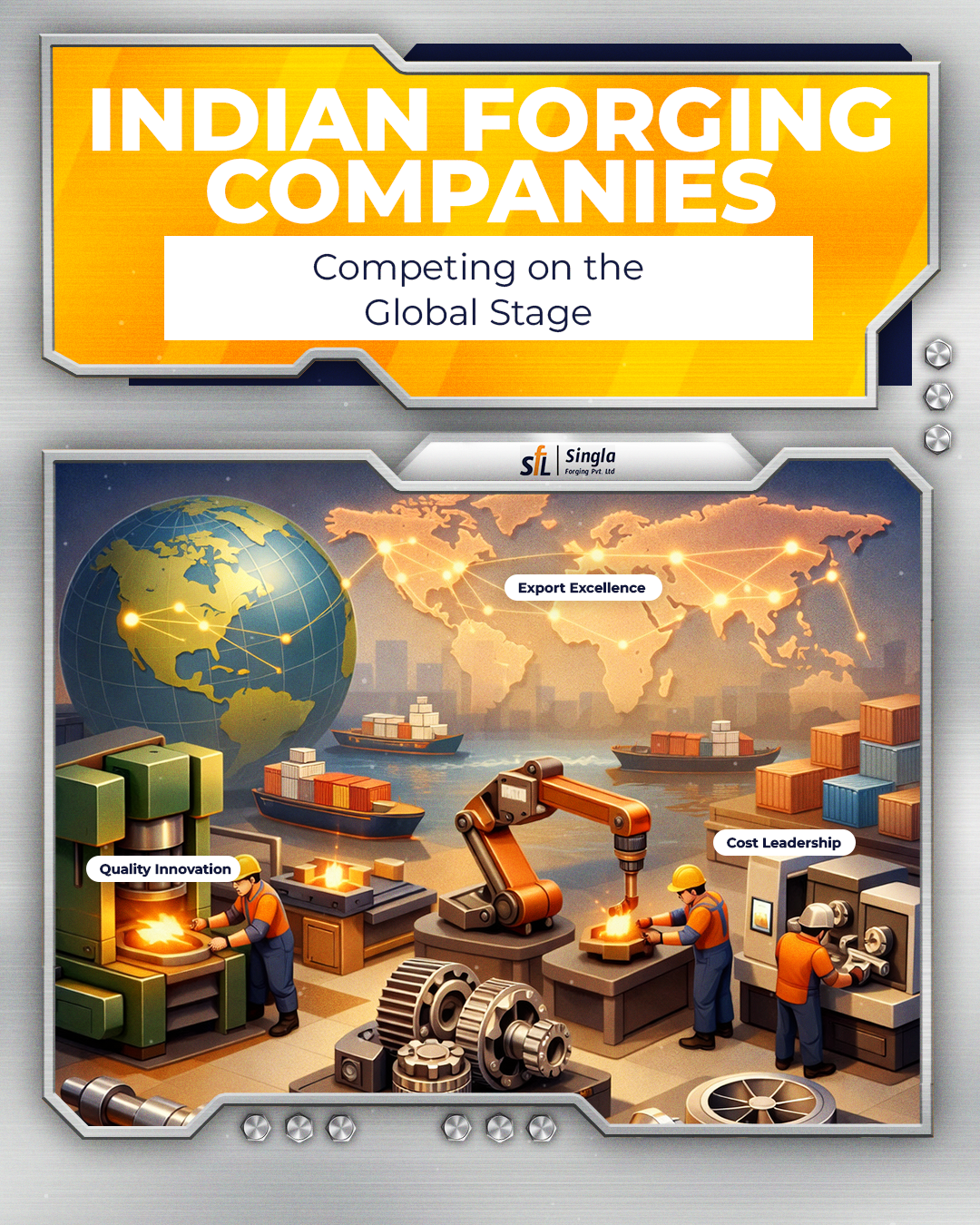
The Indian forging industry has undergone a remarkable transformation over the past decade. Once largely focused on domestic demand, Indian forging companies are now emerging as strong competitors in the global marketplace. With technological upgrades, strategic investments, and a growing reputation for quality and reliability, India’s forging sector is carving out a significant presence in a market traditionally dominated by industrial powerhouses like Germany, Japan, and the United States.
1. A Legacy of Craftsmanship Meets Modern Innovation
India’s forging heritage stretches back centuries, rooted in traditional metallurgy. Today, this legacy is evolving into a modern industrial advantage. Indian forging companies are blending time-tested skills with cutting-edge technology—investing in advanced forging presses, automation, and precision machining. This fusion ensures that products meet international quality standards, while preserving cost advantages that make Indian exports appealing worldwide.
2. Cost Competitiveness and Operational Efficiency
One of the most significant factors driving global competitiveness is cost efficiency. Indian forging firms benefit from lower labor and energy costs compared to many Western countries. However, they aren’t relying on price alone. Investments in lean manufacturing techniques and process optimization have led to higher productivity and reduced waste, helping Indian companies deliver quality forged components at competitive prices without compromising standards.
3. Expansion of Capabilities and Product Range
Indian forging companies have steadily broadened their product portfolios. From basic automotive components to heavy-duty aerospace and energy sector parts, Indian manufacturers are catering to diverse industrial needs. This expansion into high-precision and high-strength applications has opened doors to global OEMs and Tier-1 suppliers who require stringent quality and certification adherence. Compliance with international standards like ISO, AS, and EN has further strengthened their position.
4. Technology Adoption and Quality Improvements
To compete globally, Indian companies have embraced digital transformation. Smart manufacturing technologies—such as IoT-enabled monitoring, real-time quality analytics, and simulation-based process design—are becoming integral to forging operations. These technologies improve consistency, enhance traceability, and reduce defects. As quality assurance becomes a cornerstone of global supply chains, Indian firms are proving they can deliver reliability on par with international competitors.
5. Strategic Partnerships and Global Integration
Collaboration plays a key role in accessing new markets. Indian forging companies are forming strategic alliances with global players through joint ventures, technical tie-ups, and export partnerships. These relationships offer mutual benefits: foreign firms gain cost-effective sourcing options, while Indian companies earn exposure to advanced manufacturing practices and new market segments.
Furthermore, participation in international trade shows and industry forums has helped Indian manufacturers showcase their capabilities and build trust with global buyers.
6. Government Support and Policy Initiatives
The Indian government’s “Make in India” initiative and focus on manufacturing excellence have added momentum to the forging industry’s global ambitions. Policies aimed at boosting infrastructure, easing export procedures, and fostering skill development have created a more conducive environment for growth. Incentives for technology upgradation and export incentives have further enabled forging companies to scale operations and enhance competitiveness.
7. Sustainability and Future-Ready Manufacturing
Sustainability is no longer optional—it is a global expectation. Indian forging firms are increasingly adopting eco-friendly practices, such as energy-efficient processes, waste reduction, and responsible sourcing of raw materials. These measures help reduce carbon footprints and appeal to international customers who prioritize environmental responsibility in their supply chains.
Conclusion
Indian forging companies are rapidly evolving from local suppliers to globally competitive manufacturers. Their journey is powered by technological innovation, cost advantages, quality improvements, strategic alliances, and supportive government initiatives. As global industries demand higher precision, better quality, and sustainable practices, Indian forging firms are uniquely positioned to meet these challenges and expand their footprint on the world stage.
For businesses seeking reliable forging partners with an ideal balance of quality, cost efficiency, and technological capability, India’s forging industry offers immense potential—and continues to rise as a force in global manufacturing.