How Forging Reduces Material Waste Compared to Casting and Machining
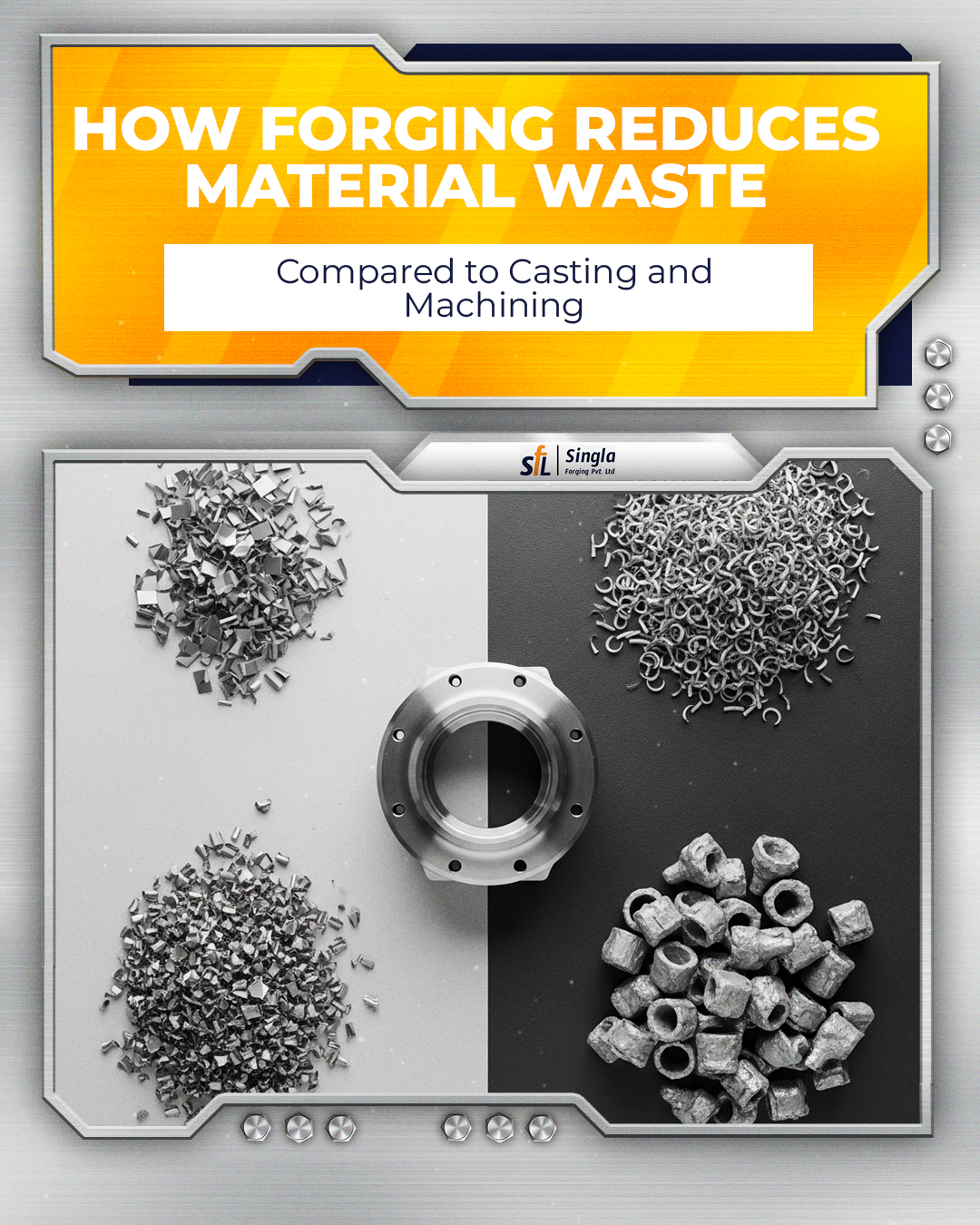
In modern manufacturing, reducing material waste is no longer just a cost-saving measure - it has become a critical factor in improving sustainability, operational efficiency, and long-term profitability. High-stakes industries-including aerospace, automotive, energy, and construction-continually seek manufacturing processes that minimize material waste without compromising part strength.
Among the major metal-forming processes, forging stands out as one of the most efficient methods for minimizing waste when compared to casting and traditional machining. Its ability to shape metal with precision, maintain structural integrity, and reduce scrap generation makes it a preferred manufacturing process for high-performance components.
Understanding the Difference Between Forging, Casting, and Machining
Before comparing waste generation, it is important to understand how these manufacturing processes work.
Forging
Forging involves shaping heated metal using compressive force. The metal is pressed, hammered, or rolled into the desired shape while maintaining a continuous grain structure. The most widely used forging techniques include open-die, closed-die (or impression-die), and seamless rolled ring forging.
Casting
Casting involves melting metal and pouring it into a mold cavity where it cools and solidifies. While casting is suitable for producing complex shapes, it often results in excess material usage and higher defect rates.
Machining
Machining removes material from a solid metal block using cutting tools, drills, or milling machines to create the final shape. Although machining offers high dimensional accuracy, it generates significant material waste in the form of chips and scrap.
Why Forging Produces Less Material Waste
1. Near-Net Shape Manufacturing
One of the biggest advantages of forging is its ability to produce near-net shape components. This means the forged part is manufactured very close to its final dimensions, requiring minimal additional machining.
Because less excess material needs to be removed, manufacturers significantly reduce scrap generation. In contrast, the machining process subtracts a large volume of material from a solid metal block to achieve the required design.
For example, a forged automotive crankshaft may require only minor finishing operations, while a machined crankshaft can waste a large percentage of the original raw material.
2. Better Material Utilization
Forging optimizes the use of raw material by directing metal flow into the required shape rather than removing it.
Manufacturers frequently buy oversized bar stock or billets just to provide enough material for gripping and cutting during the machining process. A considerable amount of this expensive material eventually becomes waste chips.
Casting also requires additional material for:
-Gates
These extra sections are later removed and discarded or recycled, increasing overall material loss.
Forging minimizes these unnecessary additions, resulting in much higher material yield.
3. Reduced Scrap Generation
Managing manufacturing waste and scrap is a primary operational hurdle. Excess scrap not only wastes raw material but also increases:
-Recycling costs
Forging generates far less scrap compared to machining because the process reshapes metal rather than cutting it away.
Additionally, forged parts generally have fewer internal defects than cast components. Casting flaws-including porosity, shrinkage, and inclusions—often result in entire parts being scrapped, driving up operational waste.
Forged components typically exhibit:
-Better consistency
This directly contributes to lower material wastage across the production cycle.
4. Improved Strength Reduces Replacement Waste
Material waste is not limited to manufacturing alone. Component failure during operation also contributes to long-term waste generation.
Forging enhances the grain flow of metal, aligning it with the shape of the component. This creates parts with superior:
-Mechanical strength
As a result, forged components last longer and require fewer replacements compared to cast parts.
For industries using critical components such as gears, shafts, flanges, and connecting rods, this durability translates into reduced lifecycle material consumption.
5. Lower Energy Consumption in Rework and Repairs
Casting defects frequently require rework, welding, repair machining, or complete remanufacturing. Every additional process consumes extra material and energy.
Forging, by contrast, produces denser and more reliable parts with fewer defects. Reduced rework means:
-Less wasted material
-Improved manufacturing efficiency
This makes forging an environmentally responsible choice for companies aiming to reduce their industrial footprint.
Environmental Benefits of Reduced Waste in Forging
Lower material waste also delivers significant environmental advantages.
When manufacturers reduce scrap generation, they also reduce:
-Raw material extraction
Because forging uses material more efficiently, it supports sustainable manufacturing practices and helps industries move toward greener production systems.
This is particularly important as global industries face increasing pressure to meet environmental regulations and sustainability goals.
Conclusion
Forging offers a clear advantage over casting and machining when it comes to reducing material waste. Its near-net shape capability, superior material utilization, lower scrap generation, and enhanced component durability make it one of the most efficient metal-forming processes available today.
While casting and machining remain important for specific applications, forging provides the ideal balance of strength, efficiency, and sustainability for high-performance industrial components.
Forging remains the superior long-term strategy for manufacturers aiming to drive down production costs, maximize resource efficiency, and meet sustainability goals.