How Cold Forging Elevates Automotive Components: Strength, Weight & Cost Advantages
How Cold Forging Elevates Automotive Components: Strength, Weight & Cost Advantages
In the fast-evolving world of automotive manufacturing, quality, efficiency, and cost-effectiveness are more important than ever. One manufacturing method rising to meet all these needs is **cold forging**. By shaping metal components at or near room temperature, cold forging delivers powerful advantages in strength, weight reduction, and cost — making it a preferred choice for automotive parts manufacturing.
What is Cold Forging?
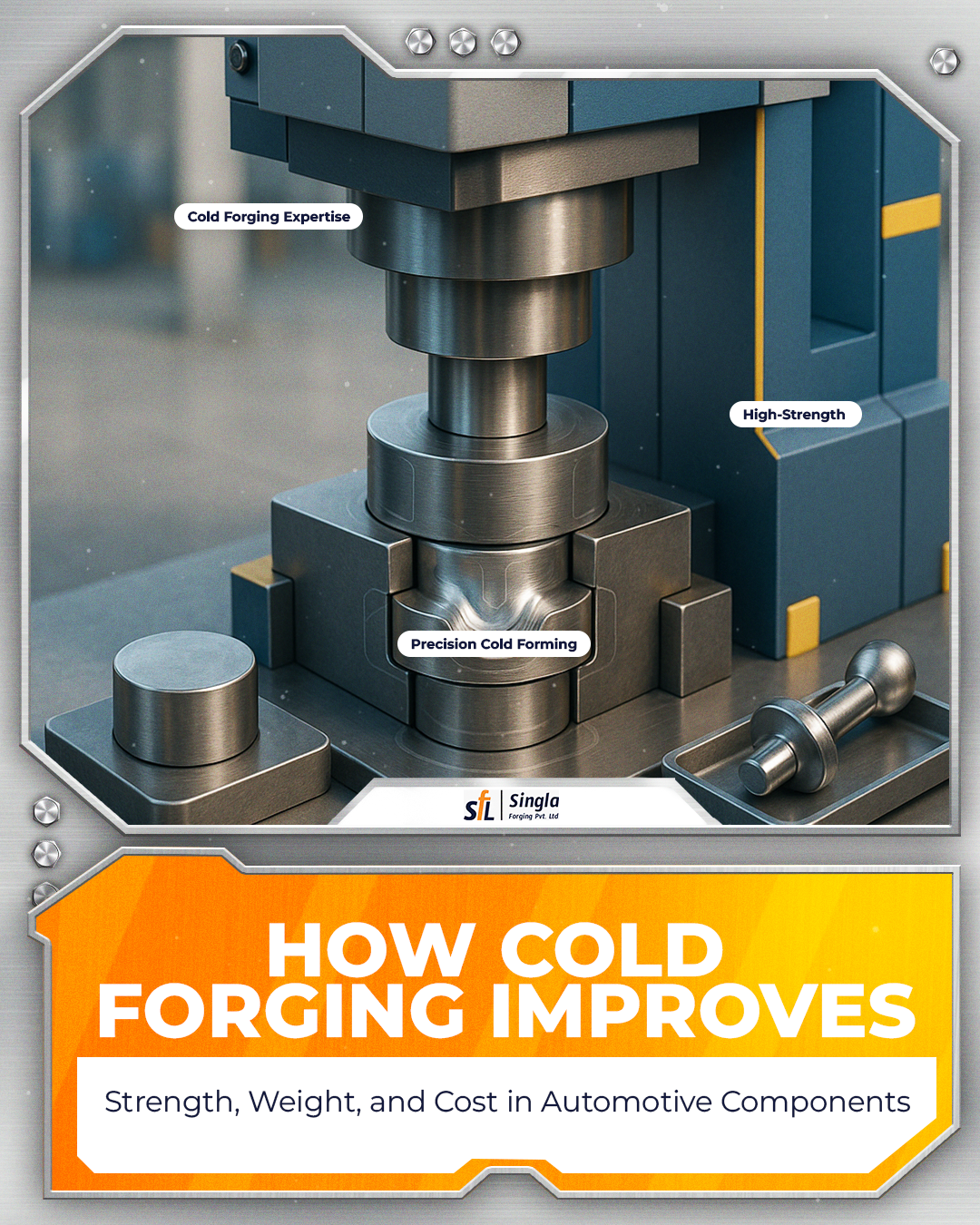
Cold forging (also sometimes referred to as cold heading) is a process in which a metal blank — typically steel, aluminum, or their alloys — is deformed under high pressure at or near room temperature, rather than being heated to high temperatures as in hot forging.
Since the metal is never heated, its internal grain structure remains intact and is re-aligned to follow the shape of the final component. This fundamental trait is at the heart of why cold forged parts often outperform their cast or machined counterparts.
Why Cold Forging Boosts Strength & Durability
Grain flow alignment and work hardening: Because metal grains are reoriented during deformation — rather than being cut or melted — cold forged components exhibit enhanced tensile strength, improved fatigue resistance, and superior resistance to impact or cyclic loading.
Improved integrity over machining or casting: In machining or casting, material may be removed or microstructural defects may be introduced. Cold forging avoids these issues, producing parts with uniform strength from surface to core — a crucial factor for automotive components exposed to dynamic stresses.
Excellent surface finish and fatigue behavior: The compressive forces in cold forging often produce smoother, harder surfaces and better wear resistance — which translates into longer service life for components such as shafts, fasteners, bushings, and suspension parts.
These mechanical advantages make cold forged parts especially suitable for high-stress automotive applications: engine components, drivetrain parts, suspension systems, steering components, and critical fasteners — wherever reliability, load-bearing capacity, and longevity matter.
Lightweight Without Compromising Strength
One of the growing demands in the automotive industry is weight reduction — driven by fuel efficiency, emissions norms, and performance goals. Cold forging helps address this by enabling:
High strength-to-weight ratio: Because cold forged parts achieve enhanced strength through controlled deformation rather than increased mass, components can often be made lighter (for instance, using thinner cross-sections) while maintaining — or even improving — structural integrity.
Efficient material usage: Unlike subtractive processes such as machining — which cut away material and generate waste — cold forging reshapes material without removal, maximizing material yield. This allows manufacturers to design lighter components without sacrificing performance.
Reduced component weight delivers cascading benefits: improved fuel efficiency, reduced load on adjoining systems, lower wear rates, and enhanced overall vehicle dynamics.
Cost Efficiency & Production Scalability
From a manufacturing and business perspective, cold forging is highly economical — particularly for high-volume automotive production. Key cost and efficiency benefits include:
- Minimal material waste: Because the process reshapes rather than removes material, scrap generation is significantly lower compared to machining or casting.
- Reduced secondary operations: High dimensional accuracy and excellent surface finish often eliminate or greatly reduce the need for post-forging machining, polishing, or corrective operations.
- High-speed, scalable production: Once tooling and dies are developed, cold forging machines can produce parts at very high throughput with exceptional consistency — driving down cost per component.
- Lower energy consumption: Compared to hot forging, which requires heating metals to extreme temperatures, cold forging operates at ambient conditions, resulting in lower energy usage and reduced environmental impact.
For manufacturers operating at scale, these advantages translate into substantial savings in both material costs and operational overhead.
Why Cold Forging Is Ideal for Automotive Components
Cold forging aligns seamlessly with the core requirements of the automotive industry:
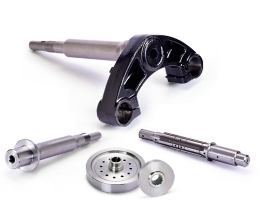
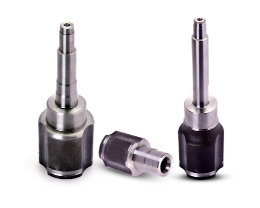
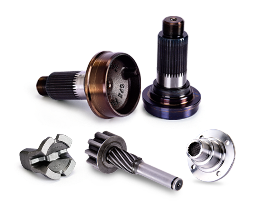
• Automotive components such as fasteners, bolts, shafts, pins, bushings, and suspension parts must endure high loads, vibration, and fatigue — all areas where cold forged parts excel.
• Automakers face constant pressure to reduce vehicle weight while maintaining safety and durability. Cold forging supports lightweight designs without compromising mechanical performance.
• High-volume production demands consistent quality and low per-part cost — strengths inherent to the cold forging process.
• Sustainability considerations are increasingly important. Cold forging supports greener manufacturing through reduced energy usage, minimal waste, and efficient material utilization.
In short, cold forging doesn’t just produce parts — it produces stronger, lighter, and more reliable parts, efficiently and economically.
Conclusion
Cold forging has emerged as a powerful manufacturing technology for automotive components. By deforming metal at room temperature under high pressure, the process preserves and optimizes grain flow — resulting in superior strength, fatigue resistance, and surface integrity. At the same time, cold forging enables lightweight yet robust components, minimizes material waste, reduces secondary machining, and significantly lowers per-part costs in high-volume production.
For companies focused on forging capabilities, adopting cold forging is more than a manufacturing decision — it is a strategic advantage. In an industry driven by performance, efficiency, and cost competitiveness, cold forging provides a decisive edge.